
How to Improve Oral Hygiene for Kids with Braces: Essential Tips for Healthy Smiles
- 1. Understanding the Challenge of Braces
- 2. Why Good Oral Hygiene is Crucial for Kids with Braces
- 3. Daily Routine for Healthy Teeth and Gums
- 4. Tools to Help Maintain Oral Hygiene
- 5. What to Avoid with Braces
- 6. When to Visit the Dentist
1. Understanding the Challenge of Braces
Braces are an excellent way to straighten teeth and correct bite issues, but they come with the challenge of maintaining oral hygiene. Braces create tiny spaces where food particles and plaque can easily accumulate, making brushing and flossing more difficult. For kids, this can make oral care feel like an extra chore, but it's essential for keeping their teeth and gums healthy throughout the treatment.
Without proper care, the risk of plaque buildup, cavities, gum disease, and even staining around the brackets increases. That’s why teaching kids how to properly clean their teeth with braces is key to ensuring a successful treatment outcome.
2. Why Good Oral Hygiene is Crucial for Kids with Braces
Maintaining good oral hygiene during orthodontic treatment is essential for several reasons:
- Prevent Cavities: Braces make it harder to clean around the brackets and wires, creating perfect hiding spots for bacteria. If left unchecked, these bacteria can cause cavities.
- Avoid Gum Disease: Plaque buildup at the gumline can lead to gingivitis, which is the first stage of gum disease. Without proper oral hygiene, this can progress to more severe forms of gum disease.
- Prevent Staining: Improper brushing and flossing can lead to unsightly stains on the teeth around the braces, which can be hard to remove after the braces come off.
3. Daily Routine for Healthy Teeth and Gums
To improve oral hygiene for kids with braces, a consistent daily routine is essential. Here’s what their daily routine should include:
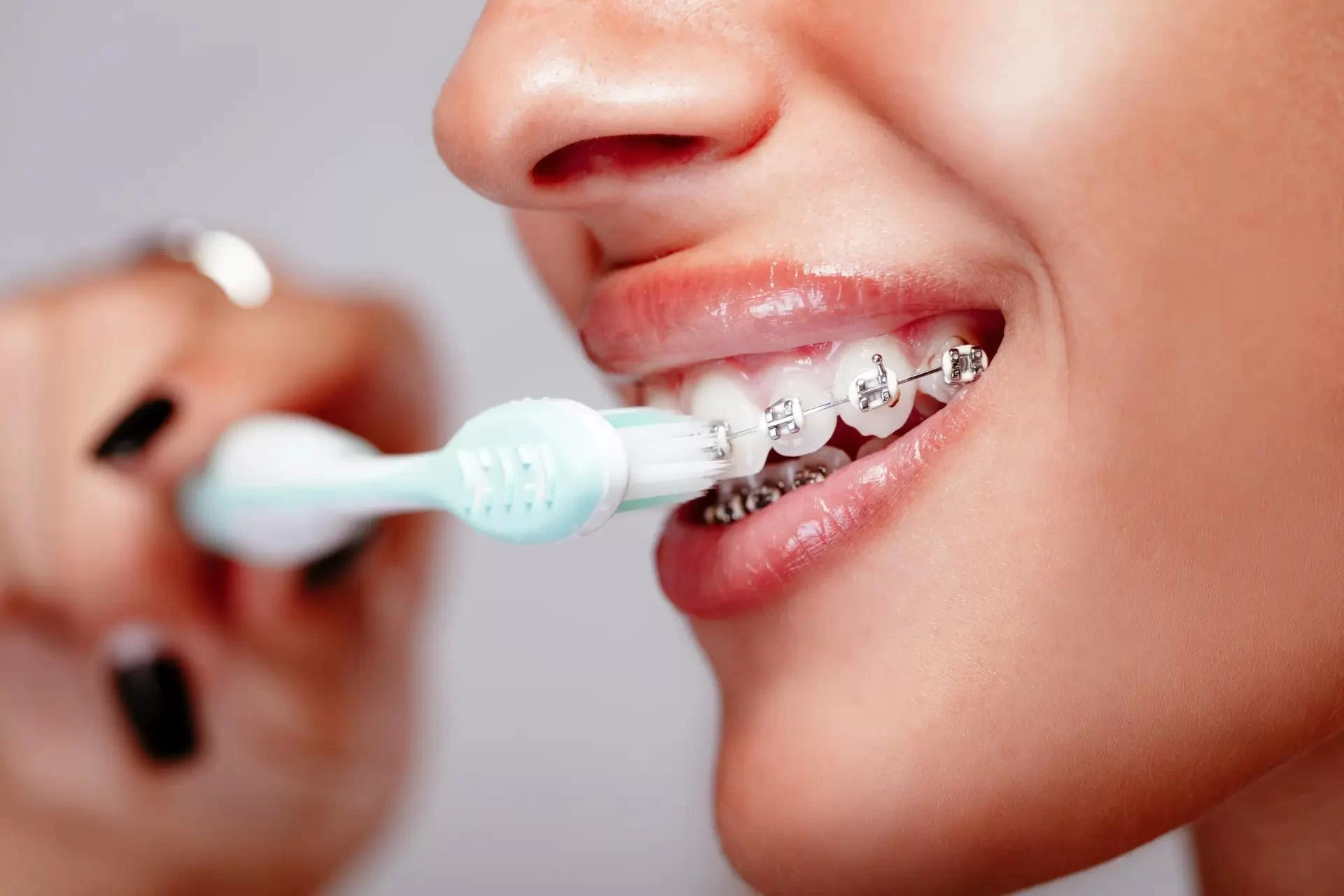
- Brush After Every Meal: Brushing after every meal helps remove food particles stuck in the braces. Use a soft-bristled toothbrush and fluoride toothpaste to gently clean around the brackets and wires. This reduces plaque buildup and helps keep the mouth fresh.
- Flossing is a Must: Flossing is more challenging with braces, but it’s still necessary. Use a floss threader or orthodontic floss to clean between the teeth and under the wires. This will remove plaque and debris that the toothbrush can’t reach.
- Use Mouthwash: Antibacterial mouthwash can help reduce plaque and fight bacteria that cause bad breath and gum disease. It also reaches areas that brushing and flossing might miss.
4. Tools to Help Maintain Oral Hygiene
There are several tools designed specifically for kids with braces to make maintaining oral hygiene easier:
- Orthodontic Toothbrush: A specially designed toothbrush with a V-shaped bristle pattern can clean around brackets and wires more effectively.
- Floss Threader: This handy tool helps guide floss under the wires and between teeth, making flossing easier and more efficient.
- Interdental Brushes: These small, cone-shaped brushes are perfect for cleaning between the brackets and wires, especially in hard-to-reach spots.
- Water Flossers: A water flosser can help remove food particles and plaque from around braces by using a high-pressure stream of water. It’s particularly useful for kids who struggle with traditional flossing.
5. What to Avoid with Braces
Kids with braces should avoid certain foods and habits to ensure their braces stay intact and their teeth remain healthy:
- Avoid Sticky Foods: Sticky foods like caramel, gum, or taffy can get stuck in the braces and are difficult to clean out.
- Avoid Hard Foods: Hard foods like popcorn kernels, ice, or hard candy can break the brackets or wires. Encourage kids to eat softer, bite-sized pieces.
- Avoid Sugary Drinks: Sugary drinks like sodas and juices increase the risk of cavities, especially when consumed frequently throughout the day.
6. When to Visit the Dentist
Regular visits to the dentist are crucial, even when a child has braces. The dentist will perform professional cleanings, check for any issues with the braces, and address any signs of gum disease or tooth decay. If there are any problems, early intervention can help prevent further damage to the teeth or gums.
In addition to regular dental visits, kids should also visit their orthodontist for periodic adjustments to their braces. These checkups ensure that the braces are working as they should and allow for any necessary adjustments to keep the treatment on track.
Teaching kids the importance of maintaining good oral hygiene with braces can significantly improve their dental health and ensure a successful treatment outcome. If you're looking for quality oral care products to help keep their smiles bright, check out Dentistry Toothtruth for trusted recommendations.






 North Portland (St. Johns) TenderCare Dental2.7 (6 review)
 Northwood Dental4.0 (471 review)
 Apex Dental Care4.0 (323 review)
 Isthmus Dental, Ltd4.0 (215 review)
 Gateway Dentistry4.0 (152 review)
 Rayhan & Marvizi, DDS5.0 (104 review)
 The Importance of Oral Health Education During Pregnancy for a Healthy Pregnancy
 Best Tips for Brushing Your Teeth Properly for Healthy Gums: Essential Techniques for Oral Health
 Why Skipping Dental Checkups Can Lead to Bigger Oral Health Problems
 Advantages of Porcelain Dental Restorations
 How Can Diabetes Cause Tooth and Gum Problems? Preventing and Managing Oral Health Issues
 Healthy Habits for Promoting Good Oral Health and Hygiene: Tips for a Healthy Smile