
Best Orthodontic Options for Crooked Teeth: Finding the Right Treatment for You
- Understanding Crooked Teeth and Orthodontics
- Traditional Braces: Tried and True
- Clear Aligners: Discreet and Comfortable
- Other Orthodontic Treatment Options
- Case Studies: Real-Life Success Stories
Crooked teeth are a common dental issue that many people seek to correct through orthodontic treatments. Whether caused by genetics, childhood habits, or trauma, crooked teeth can affect both the appearance of your smile and your overall oral health. Misaligned teeth can lead to problems with biting, chewing, and even speaking, making orthodontic care a valuable investment in both aesthetics and function.
Traditional Braces: Tried and True
Traditional metal braces are still one of the most effective ways to straighten crooked teeth. These braces consist of metal brackets, wires, and elastic bands that work together to gradually move your teeth into the correct position. While traditional braces are highly visible, they are incredibly reliable and can correct even the most severe cases of crooked teeth.
Advantages of Traditional Braces
- Proven Effectiveness: Traditional braces are well-suited for complex cases, offering consistent and predictable results.
- Customizable: Patients can choose from a variety of colors for the elastics, making the braces slightly more customizable.
- Permanent Results: Once your treatment is complete, traditional braces leave behind a straight, functional smile that lasts.
Disadvantages of Traditional Braces
- Visibility: Braces are very noticeable, which may be a concern for adults or teens who are self-conscious about their appearance.
- Comfort: The metal wires and brackets can sometimes cause discomfort or irritation to the gums and mouth.
Clear Aligners: Discreet and Comfortable
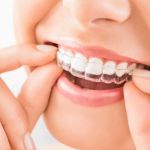
Clear aligners, such as Invisalign, have become a popular alternative to traditional braces. These transparent plastic trays fit over your teeth and gradually shift them into alignment. Clear aligners are virtually invisible, making them a great option for people who want to straighten their teeth without drawing attention to their treatment.
Advantages of Clear Aligners
- Discreet: Clear aligners are nearly invisible, allowing you to straighten your teeth without feeling self-conscious.
- Removable: You can remove the aligners to eat, brush, and floss, making it easier to maintain good oral hygiene during treatment.
- Comfortable: Clear aligners are made of smooth plastic, which eliminates the discomfort and irritation that often comes with traditional metal braces.
Disadvantages of Clear Aligners
- Not for Severe Cases: Clear aligners are typically best for mild to moderate misalignments and may not be effective for more severe cases of crooked teeth.
- Discipline Required: Since clear aligners are removable, they require a certain level of discipline. You must wear them for 20-22 hours a day for optimal results.
Other Orthodontic Treatment Options
In addition to traditional braces and clear aligners, there are several other orthodontic options available. These options may be more appropriate depending on the severity of the misalignment and your personal preferences:
1. Ceramic Braces
Ceramic braces function similarly to traditional metal braces but use clear or tooth-colored brackets that blend more seamlessly with your teeth. This makes them a more discreet option for those who want the effectiveness of metal braces but with a more subtle appearance.
2. Lingual Braces
Lingual braces are placed on the back of the teeth, making them virtually invisible from the front. They are a good option for those who want braces that are not visible, but they can be more challenging to clean and may cause more discomfort during the adjustment period.
3. Self-Ligating Braces
Self-ligating braces use a special clip instead of elastic bands to hold the wire in place. This can reduce friction, leading to potentially faster and more comfortable treatment compared to traditional braces. They are available in both metal and ceramic varieties.
Case Studies: Real-Life Success Stories
Real-life examples can help highlight the effectiveness of various orthodontic treatments. Here are a couple of success stories from patients who found the right solution for their crooked teeth:
Case Study 1: Sarah's Journey with Traditional Braces
Sarah, a 28-year-old professional, had always been self-conscious about her crooked teeth. After consulting with her orthodontist, she chose traditional metal braces to correct her severe dental misalignment. Though the braces were visible, Sarah was committed to improving her smile, and after 18 months of treatment, her teeth were beautifully aligned. Now, she feels much more confident in both her personal and professional life.
Case Study 2: Mark's Experience with Clear Aligners
Mark, a 35-year-old lawyer, needed a less noticeable orthodontic solution for his moderately crooked teeth. He opted for clear aligners, which allowed him to straighten his teeth without anyone noticing his treatment. After completing his Invisalign regimen in about a year, Mark now enjoys a straight smile without the hassle of traditional braces.
If you're struggling with crooked teeth and considering orthodontic treatment, it's essential to explore all of your options to find the best solution for you. To learn more about your orthodontic treatment options, visit Dentistry Toothtruth for professional advice and to discover the latest orthodontic products and services.

 Dr. Michael Silverman Dental P.C.4.0 (23 review)
 Mission Dental Arts5.0 (167 review)
 ClearChoice Dental Implant Center4.0 (383 review)
 Potter Orthodontics4.0 (131 review)
 Reflections Dental4.0 (542 review)
 Michael E Krone & Associates5.0 (39 review)
 The Importance of Oral Health Education During Pregnancy for a Healthy Pregnancy
 Best Tips for Brushing Your Teeth Properly for Healthy Gums: Essential Techniques for Oral Health
 Why Skipping Dental Checkups Can Lead to Bigger Oral Health Problems
 Advantages of Porcelain Dental Restorations
 How Can Diabetes Cause Tooth and Gum Problems? Preventing and Managing Oral Health Issues
 Healthy Habits for Promoting Good Oral Health and Hygiene: Tips for a Healthy Smile