
Dental Implants vs Dental Crowns: Which is the Best Choice for You?
- 1. Understanding Dental Implants
- 2. Understanding Dental Crowns
- 3. Key Differences Between Implants and Crowns
- 4. Pros and Cons of Dental Implants
- 5. Pros and Cons of Dental Crowns
- 6. Which Option is Right for You?
1. Understanding Dental Implants
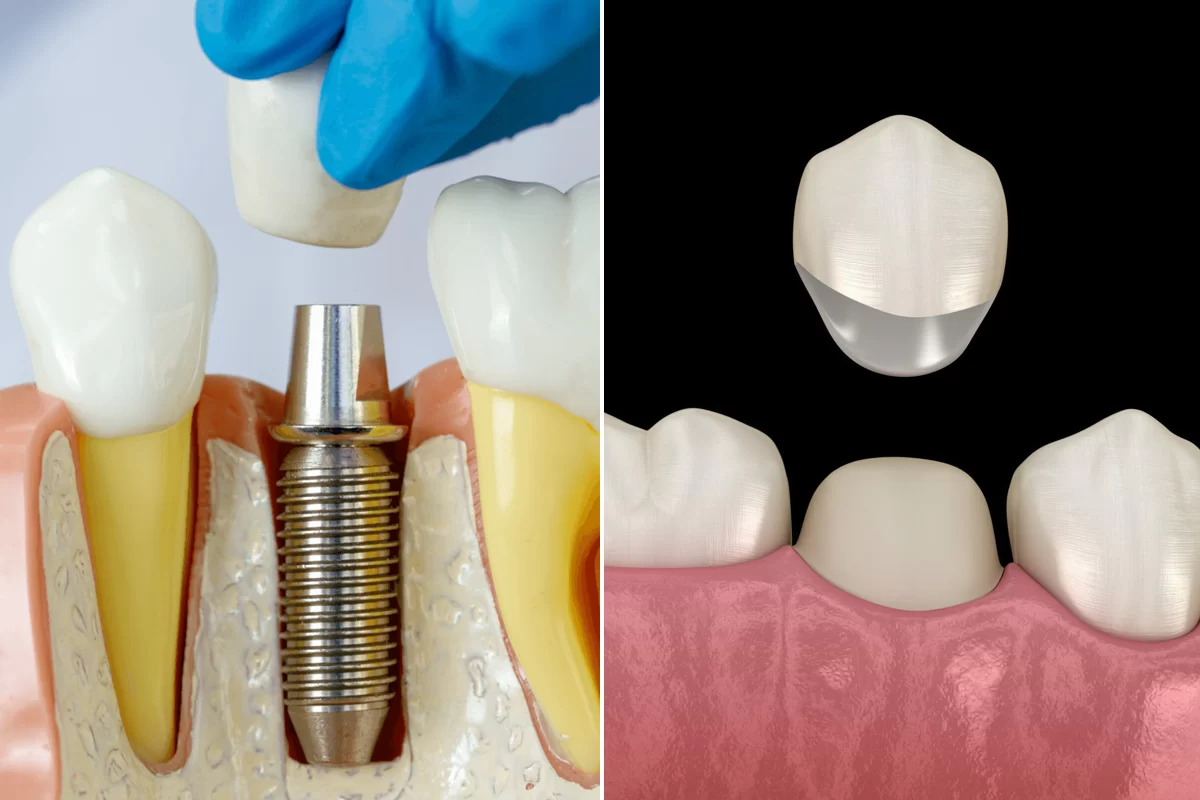
Dental implants are a permanent solution for missing teeth. They involve placing a titanium post into the jawbone, which acts as a root for the replacement tooth. Over time, the post fuses with the bone through a process called osseointegration, providing a stable foundation for a crown or bridge. Dental implants are designed to mimic natural teeth both in function and appearance, making them a popular choice for many patients.
Implants are ideal for individuals with healthy gums and sufficient bone density. They require a surgical procedure, which can take several months for full healing, but the results are long-lasting and durable.
2. Understanding Dental Crowns
A dental crown is a cap that covers a damaged or decayed tooth. Crowns are commonly used to restore a tooth’s size, shape, strength, and appearance. They can be made from various materials, including porcelain, ceramic, and metal alloys. Crowns are often placed after root canals or to protect a weakened tooth from further damage.
Unlike implants, crowns are placed directly over an existing tooth structure. They do not require surgery and can be completed in just a few visits to the dentist. However, if the tooth is severely decayed or damaged, the crown may not be a suitable option without the support of a dental implant.
3. Key Differences Between Implants and Crowns
While both dental implants and crowns serve to restore the function and appearance of teeth, they differ significantly in their design and application:
- Procedure: Dental implants require a surgical procedure to place the titanium post into the jawbone, while crowns are simply placed over existing teeth or dental implants.
- Durability: Implants tend to last longer, often a lifetime, with proper care, while crowns may need to be replaced after 10-15 years due to wear and tear.
- Cost: Dental implants are generally more expensive because they involve surgery and a longer treatment process, while crowns are more affordable and less invasive.
- Suitability: Implants are ideal for those who are missing teeth, while crowns are better suited for patients who have a healthy tooth structure but need restoration.
4. Pros and Cons of Dental Implants
Dental implants offer several advantages, but they also come with some considerations:
- Pros:
- Long-lasting and durable
- Look and feel like natural teeth
- Preserves jawbone density by preventing bone loss
- Does not affect adjacent teeth
- Cons:
- Requires a surgical procedure
- Longer treatment time, often requiring multiple visits over several months
- More expensive than crowns
5. Pros and Cons of Dental Crowns
Dental crowns are a reliable and cost-effective option, but like implants, they have their pros and cons:
- Pros:
- Non-invasive procedure (no surgery required)
- Relatively quick treatment with minimal recovery time
- Can be used to restore a single tooth or multiple teeth
- Cons:
- Can wear down over time and may need replacement
- May require the removal of healthy tooth structure for placement
- Not suitable for replacing missing teeth (unless paired with an implant)
6. Which Option is Right for You?
When deciding between dental implants and crowns, the right choice depends on your specific needs, dental health, and budget:
- If you're missing teeth and want a long-lasting, natural-looking solution, dental implants may be the best option for you.
- If you have a damaged tooth but the root is still healthy, a crown may be a more suitable and cost-effective solution.
- For individuals seeking a quick, non-invasive treatment, crowns provide a faster solution compared to implants.
It's essential to consult with a dentist to determine the most appropriate treatment for your condition. For more information or to schedule a consultation, visit Dentistry Toothtruth.






 California Dental4.0 (210 review)
 Dr. Matrullo & Associates4.0 (93 review)
 Graylyn Dental4.0 (681 review)
 Sage Dental of Windermere4.0 (423 review)
 SoCal PerioImplants the office of Drs. Caplanis and Madi5.0 (227 review)
 Raleigh Periodontics and Implant Dentistry5.0 (179 review)
 The Importance of Oral Health Education During Pregnancy for a Healthy Pregnancy
 Best Tips for Brushing Your Teeth Properly for Healthy Gums: Essential Techniques for Oral Health
 Why Skipping Dental Checkups Can Lead to Bigger Oral Health Problems
 Advantages of Porcelain Dental Restorations
 How Can Diabetes Cause Tooth and Gum Problems? Preventing and Managing Oral Health Issues
 Healthy Habits for Promoting Good Oral Health and Hygiene: Tips for a Healthy Smile